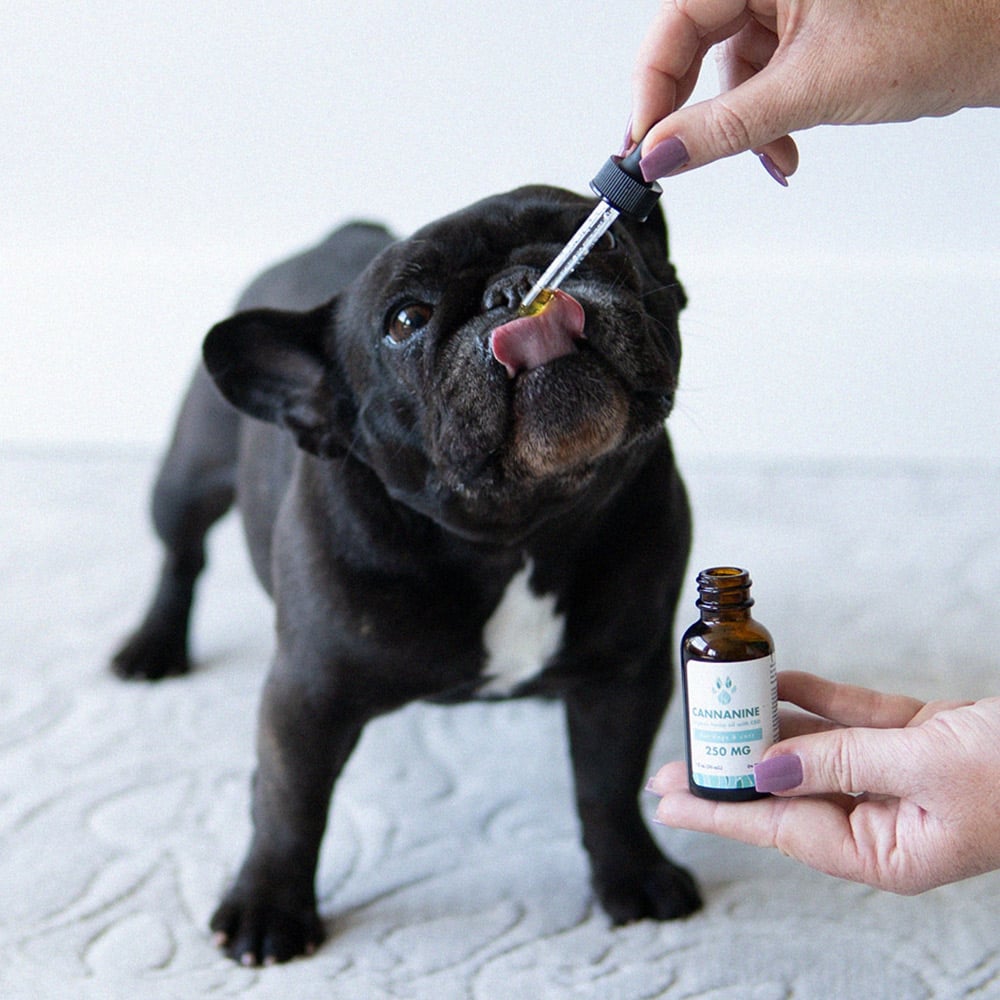
CBD for Dog Barking: Does It Actually Reduce Excessive Barking? (Vet Reviewed)
Veterinary advisor to Cannanine. All medical claims in this article have been reviewed for accuracy.
CBD for Dog Barking: Does It Actually Reduce Excessive Barking? (Vet Reviewed)
If your dog barks constantly and nothing seems to help, you are not alone. Excessive barking is one of the most common behavioral complaints from dog owners — and one of the most frustrating, because the causes vary so widely. CBD has become one of the most-searched natural remedies for excessive barking, and the research gives us a clear picture of when it actually works and when it will not.
The short answer: CBD can meaningfully reduce barking when the root cause is anxiety, stress, or pain. It will not stop a dog that barks because it is bored or under-exercised. Knowing which type of barker your dog is determines whether CBD is the right tool.
Why Dogs Bark Excessively: 5 Root Causes
Before reaching for any supplement, identify the reason your dog is barking. CBD is effective for some causes and largely irrelevant for others.
1. Anxiety and Fear
Anxiety-driven barking is the most common type that responds to CBD. Dogs with anxiety bark at perceived threats, during storms, at strangers, or in response to sounds that trigger a fear response. The barking is often accompanied by other anxiety signs: pacing, panting, trembling, destructive behavior, or inability to settle. This is the strongest use case for CBD.
2. Separation Anxiety
Dogs with separation anxiety bark, howl, or whine when left alone. A 2023 peer-reviewed study found CBD significantly reduced stress behaviors in dogs during a separation test compared to placebo. Separation anxiety barking typically starts within minutes of the owner leaving and may be accompanied by destructive chewing or house soiling.
3. Trigger-Reactive Barking
Some dogs bark explosively at specific triggers: other dogs, skateboards, bikes, delivery trucks, the mail carrier. This is often rooted in anxiety or an under-socialized history. CBD’s calming effect can reduce the intensity of trigger reactions, making behavior training more effective. It will not replace training, but it can lower the dog’s arousal threshold enough to make real progress possible.
4. Pain or Physical Discomfort
Dogs in pain often become more vocal. If your dog’s barking is relatively new and accompanied by changes in movement, posture, or appetite, pain may be the cause. CBD has demonstrated meaningful pain relief in dogs. A 2020 clinical trial published in Pain found CBD significantly decreased pain scores and increased mobility in dogs with osteoarthritis. If pain is driving the barking, CBD addresses the root cause directly.
5. Boredom, Demand, or Breed Tendency
Dogs that bark because they are under-exercised, bored, or demanding attention are not good candidates for CBD as a primary solution. No supplement substitutes for adequate physical exercise and mental enrichment. Similarly, some breeds — Beagles, Huskies, Shetland Sheepdogs, Miniature Schnauzers, Chihuahuas — are genetically predisposed to high vocal output. CBD will not fundamentally alter breed-driven behavior. For these dogs, exercise, enrichment, and positive reinforcement training are the foundation.
Will CBD Help My Dog Stop Barking?
CBD will not make a dog silent. What it can do is reduce the anxiety, stress response, or pain that drives excessive barking in the first place. Owners whose dogs bark from anxiety — including separation anxiety, noise phobia, and trigger reactivity — report the most consistent results with CBD. Dogs whose barking stems from boredom or breed tendency show little to no improvement from CBD alone.
The research supports this distinction. CBD works by interacting with the endocannabinoid system’s CB1 and CB2 receptors, which regulate stress hormones, inflammation, and the nervous system’s fear response. When excess cortisol is driving anxious behavior, CBD’s regulatory effect on stress hormones can calm the feedback loop that produces constant barking.
What the Research Shows
Three studies are particularly relevant:
- A 2024 study published in the Journal of Animal Science found that even a single dose of CBD measurably reduced stress indicators in dogs, suggesting it can provide acute relief before high-stress situations (thunderstorms, vet visits, travel) in addition to chronic daily support.
- The 2023 separation study showed CBD specifically reduced stress behaviors during owner absence — the core mechanism behind separation anxiety barking.
- A 2020 review in Frontiers in Veterinary Science confirmed CBD’s safety profile in dogs with repeated daily dosing, with no serious adverse effects at therapeutic doses — supporting its use as an ongoing daily supplement for chronic anxious barkers.
What to Expect Week by Week
One of the most common frustrations owners have with CBD is expecting instant results and giving up too early. Here is a realistic timeline:
Days 1-3
Some dogs show a slight reduction in baseline restlessness within the first 24-48 hours of consistent twice-daily dosing. Acute doses (given 30-45 minutes before a known stressor) may produce noticeable calming from the very first use. Do not expect dramatic changes this early.
Week 1-2
Most owners start noticing subtle differences: the dog settles faster after a trigger, recovers more quickly, or seems slightly less reactive. The barking frequency may begin to decrease. Stick with consistent twice-daily dosing even if improvements seem small.
Week 3-4
This is typically when meaningful improvement becomes obvious. Owners report their dogs barking less often, with shorter bark duration per trigger event, and a calmer baseline demeanor throughout the day. This window aligns with CBD reaching stable levels in the endocannabinoid system.
After 4-6 Weeks
Dogs that respond well often show significantly reduced anxiety-driven barking. Many owners find they can shift to situational dosing (only before known stressors) rather than twice-daily maintenance. Some dogs continue to benefit most from ongoing daily support, particularly those with chronic separation anxiety or generalized anxiety disorder.
If you see zero improvement after 6 full weeks of consistent use at an appropriate dose, CBD may not be the right tool for your dog’s barking. Rule out boredom, breed tendency, or an unaddressed medical cause first.
Signs CBD Is Working for Your Dog’s Barking
It is not always obvious when CBD is helping, especially in the early weeks. Watch for these signs that the supplement is doing its job:
- Shorter recovery time after triggers. Your dog still barks at the mailman, but settles in 2 minutes instead of 15.
- Lower bark intensity. The barking is present but less frantic, less desperate-sounding.
- Reduced frequency. Fewer barking episodes per day overall.
- Better settling behavior. The dog relaxes more easily when nothing is actively happening.
- Improved response to commands during aroused states. If you could not get your dog’s attention during a barking episode before, CBD can lower arousal enough that commands start landing.
- Less anticipatory anxiety. Dogs that paced and whined before a known stressor (car trip, fireworks) show less pre-event distress.
CBD and Training: A Better Combined Approach
For anxiety-driven and reactive barking, CBD works best when combined with behavior training rather than used as a standalone fix. Here is why: anxious dogs have elevated arousal that makes them nearly impossible to train during a triggered state. CBD lowers baseline anxiety enough that training becomes more effective — your dog can actually hear and respond to commands instead of being overwhelmed by its stress response.
Practical Techniques to Pair with CBD
Desensitization to Specific Triggers
Introduce the trigger (another dog, a bicycle, the doorbell) at a distance or volume that does not provoke barking. Reward calm behavior. Gradually decrease the distance or increase the intensity over multiple sessions, only moving forward when your dog is reliably calm at the current level. This process takes weeks, not days. CBD support during sessions can meaningfully lower the arousal threshold, making progress faster.
“Look at That” (LAT)
When your dog notices a trigger, mark the moment they look at it with a calm “yes” and reward with a high-value treat. The goal is to replace the emotional response (anxiety -> barking) with a conditioned response (trigger -> look at handler -> get rewarded). CBD makes this possible by keeping arousal low enough to accept food around triggers.
Teaching a “Quiet” Cue
Wait for your dog to bark, let them bark 2-3 times, then calmly say “quiet” and immediately reward the moment silence occurs. Do not shout “quiet” — elevated human arousal increases dog arousal. Practice in low-stakes environments first before expecting it to work in high-distraction situations.
Pre-Event CBD Dosing for Known Stressors
Give a full dose of CBD oil 30-45 minutes before predictable triggers: guests arriving, thunderstorm season, fireworks, vet visits. CBD oil absorbs faster than soft chews, making it the better choice when timing matters. Many owners find that combining the pre-event dose with a brief decompression walk significantly reduces event-related barking.
How to Use CBD for a Barking Dog
Daily Maintenance (Anxiety, Separation, Reactivity)
For dogs with chronic anxiety-driven barking, give CBD twice daily with food. Consistent twice-daily dosing maintains stable blood levels and produces better results than occasional use. Allow 2-4 weeks of consistent use before evaluating results. Cannanine’s bacon-flavored CBD soft chews are the easiest option for daily maintenance — most dogs eat them straight from the bag without any fuss.
Situational Use (Known Triggers)
For predictable stressors — thunderstorms, fireworks, travel, vet visits — give a dose 30-45 minutes before the event. CBD oil absorbs faster than chews, making it the better choice for situational dosing when timing matters.
CBD Dosage for Dogs That Bark Excessively
| Dog’s Weight | Starting Dose | Maintenance Dose | Frequency |
|---|---|---|---|
| Under 25 lbs | 1-2 mg CBD | 2-4 mg CBD | Twice daily |
| 25-50 lbs | 2-4 mg CBD | 4-8 mg CBD | Twice daily |
| 50-75 lbs | 4-6 mg CBD | 6-12 mg CBD | Twice daily |
| Over 75 lbs | 6-8 mg CBD | 10-16 mg CBD | Twice daily |
Start at the low end and increase incrementally every 5-7 days if needed. Give with food to improve absorption and reduce any GI sensitivity. See our full CBD dosage guide for dogs for complete weight-based reference tables.
Choosing the Right CBD Product for Barking
CBD oil vs. soft chews: For situational use (pre-storm, pre-vet), CBD oil is faster-acting — it typically takes effect in 20-40 minutes versus 45-90 minutes for chews. For daily maintenance dosing where timing is less critical, soft chews are easier to give consistently and most dogs take them willingly.
Full-spectrum vs. broad-spectrum: Full-spectrum CBD provides the most complete anxiolytic effect. The combination of cannabinoids (including trace THC under 0.3%), terpenes like linalool and myrcene, and CBD working together produces stronger calming effects than CBD isolate alone. For anxiety-driven barking specifically, full-spectrum is the recommended choice.
What to look for: Always choose products with a Certificate of Analysis (COA) from an independent third-party lab confirming CBD potency, THC under 0.3%, and absence of pesticides, heavy metals, and residual solvents. CBD is a bioaccumulator — it absorbs heavy metals from soil — so sourcing and testing matter significantly for safety and effectiveness.
When to See a Vet About Your Dog’s Barking
CBD is a useful tool for behavioral barking rooted in anxiety, but some barking warrants a veterinary visit before you reach for any supplement:
- New-onset barking in an adult dog with no obvious behavioral cause. Sudden increases in vocalization can indicate pain, a neurological issue, or cognitive dysfunction syndrome (doggy dementia) in older dogs.
- Barking accompanied by other behavioral changes. Changes in appetite, gait, sleep patterns, or toilet habits alongside increased barking suggest an underlying medical issue.
- Severe separation anxiety. Dogs that injure themselves attempting to escape, destroy property extensively, or refuse to eat when alone may need prescription anti-anxiety medication in addition to or instead of CBD as a starting point.
- No response after 6 weeks of consistent CBD at appropriate doses. A vet can help rule out medical causes and discuss additional options.
CBD and prescription anxiety medications are not mutually exclusive. Many dogs do well on a combination. Always tell your vet what supplements your dog is taking, including CBD, especially if other medications are involved.
Other Steps That Support Quiet Behavior
- Exercise before anxious periods. A physically tired dog has a lower baseline stress response. A vigorous walk or play session before a predictable stressor meaningfully reduces barking intensity.
- Mental enrichment daily. Puzzle feeders, sniff walks, and training games tire a dog’s brain as effectively as physical exercise. A mentally engaged dog is a calmer dog.
- White noise or calming music. Background noise masks trigger sounds (outside dogs, cars, delivery trucks) that set off alert barking. Research published in Applied Animal Behaviour Science found classical music reduced stress indicators in kenneled dogs.
- Consistent schedule. Dogs with anxiety are highly sensitive to routine disruption. Keeping feeding, walks, and sleep times consistent reduces baseline anxiety.
- Management in the short term. Baby gates, crates, or blocking window access to remove visual triggers can reduce barking episodes while CBD builds to therapeutic levels and training progresses.
Frequently Asked Questions
Will CBD stop my dog from barking?
CBD will not stop barking entirely — and that is not the goal. Barking is a dog’s primary form of communication. What CBD can do is reduce anxiety, stress, and pain-driven barking by addressing the underlying cause. Owners typically see their dog bark less frequently, recover more quickly after being triggered, and show less intensity in their barking response. Dogs that bark from boredom or breed tendency see little benefit from CBD alone.
How long does CBD take to work for dog barking?
For acute situational use (before a storm or vet visit), CBD oil begins working in 20-40 minutes. For chronic anxiety-driven barking, most owners see meaningful improvement after 2-4 weeks of consistent twice-daily dosing as CBD builds to stable therapeutic levels in the body. Single doses produce some effect, but consistent daily use produces significantly better long-term results.
How much CBD should I give my dog for barking?
Start at 1-2 mg per 10-25 lbs of body weight, given twice daily with food. Increase incrementally every 5-7 days if needed. For situational use, give a full maintenance-level dose 30-45 minutes before the anticipated trigger. See the dosage table above for full weight-based guidance.
Can I give my dog CBD every day for barking?
Yes. Daily use is both safe and more effective than occasional use for chronic anxiety-driven barking. The 2020 Frontiers in Veterinary Science review confirmed CBD’s safety at daily therapeutic doses with no serious adverse effects. Consistent twice-daily dosing maintains stable levels and produces better results than sporadic use.
Is CBD better than anti-anxiety medication for dog barking?
CBD and prescription anti-anxiety medications work through different mechanisms and are not direct substitutes. For severe anxiety, prescription options like fluoxetine or trazodone may be more immediately effective. CBD has a gentler effect profile, no known organ toxicity concerns with long-term use, and no prescription requirement — making it a reasonable first step for mild to moderate anxiety-driven barking, or a complement to prescription medication for severe cases. Always discuss with your vet for severe anxiety.
What CBD product works best for dogs that bark at strangers or other dogs?
Trigger-reactive barking responds best to a combination of daily CBD maintenance (to lower baseline arousal) plus a situational dose when you anticipate exposure to the trigger. Full-spectrum CBD oil is the best product choice — the oil allows precise dosing and faster absorption than chews, which matters when you need reliable timing around a trigger event.
These statements have not been evaluated by the Food and Drug Administration. This product is not intended to diagnose, treat, cure, or prevent any disease. The information on this website is not intended to replace a one-on-one relationship with a qualified healthcare professional.
Try Cannanine CBD for Calmer, Quieter Days
Cannanine CBD is broad spectrum, THC-free, and third-party lab tested. It’s a natural starting point for dogs who bark from anxiety or overstimulation.
- Cannanine CBD Oil 250mg — precise dosing, easy to mix into food
- Cannanine CBD Oil 500mg — most popular size
- Bacon Flavored CBD Soft Chews — great for on-the-go or picky dogs